Older multifamily properties across the North End, Beacon Hill, and Back Bay frequently feature interconnected heating risers, historic plaster cavities, and shared utility chases that allow German cockroach nymphs to…
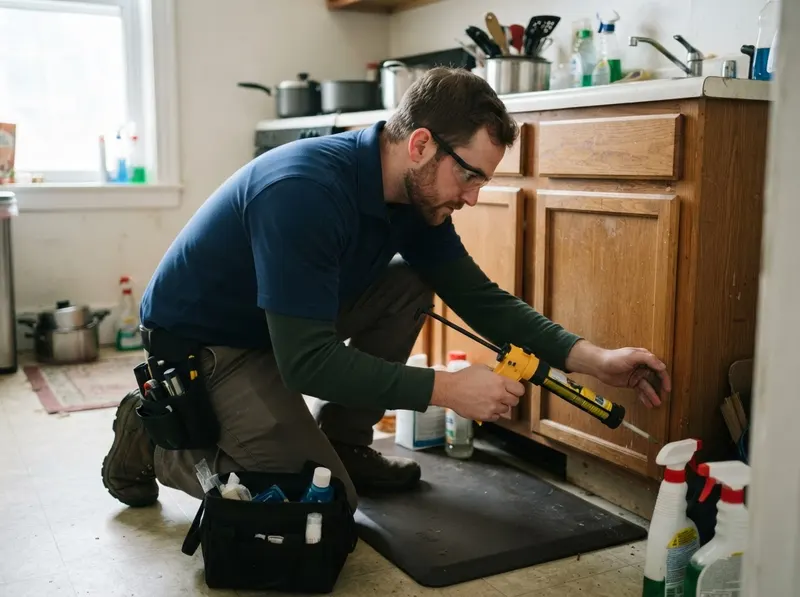
Older multifamily properties across the North End, Beacon Hill, and Back Bay frequently feature interconnected heating risers, historic plaster cavities, and shared utility chases that allow German cockroach nymphs to travel between apartment units. Over-the-counter pyrethroid aerosol foggers trigger rapid dispersal, driving insects deeper into framing bays rather than eradicating the reproductive core. Cockroach integrated eradication relies on clinical indoor placements of hydramethylnon, indoxacarb, or clothianidin baits inside hinge pockets, sub-sink pipe penetrations, and motor housings. These formulations exploit horizontal transfer: foraging adults consume active bait and return to deep structural voids, passing lethal doses to developing instars via communal aggregation.
Eradication strategy differs between architectural styles. In flat-roof brownstones and rowhouses along Dorchester and South Boston, moisture gradients around cast-iron soil stacks create primary nesting reservoirs. Interventions in these areas incorporate high-efficiency particulate air (HEPA) vacuuming to lower nymph counts instantly, supplemented by silica-based desiccant dust injected directly into enclosed plumbing chases. In modern builds and renovated Victorians throughout Jamaica Plain and Charlestown, the trade-off centers on prep labor versus chemical volume: meticulous mechanical sealing of baseboard gaps and wet-wall entry points drastically cuts the total volume of materials required while shielding children and household pets from direct contact.
Execution follows an objective, sequential standard: 1. Thorough visual inspection and sticky-monitor mapping of kitchen and bathroom plumbing walls to calculate egg-case (ootheca) density. 2. Vacuum extraction of congregating aggregations to disrupt pheromone trails. 3. Placement of micro-dot gel baits paired with insect growth regulators that disrupt chitin synthesis and sterilize remaining reproductive females. 4. Sealing of shared pipe escutcheons using copper mesh and non-shrink elastomeric sealant. Structural eradication plans require a secondary monitoring inspection 14 to 21 days later to target newly hatched instars before they reach reproductive maturity.
Every job gets a firm, written price after a free on-site visit.
Tell us about your cockroach integrated eradication job in Boston and we'll send a clear, written quote, usually the same day.
 Kervano Pest Specialists